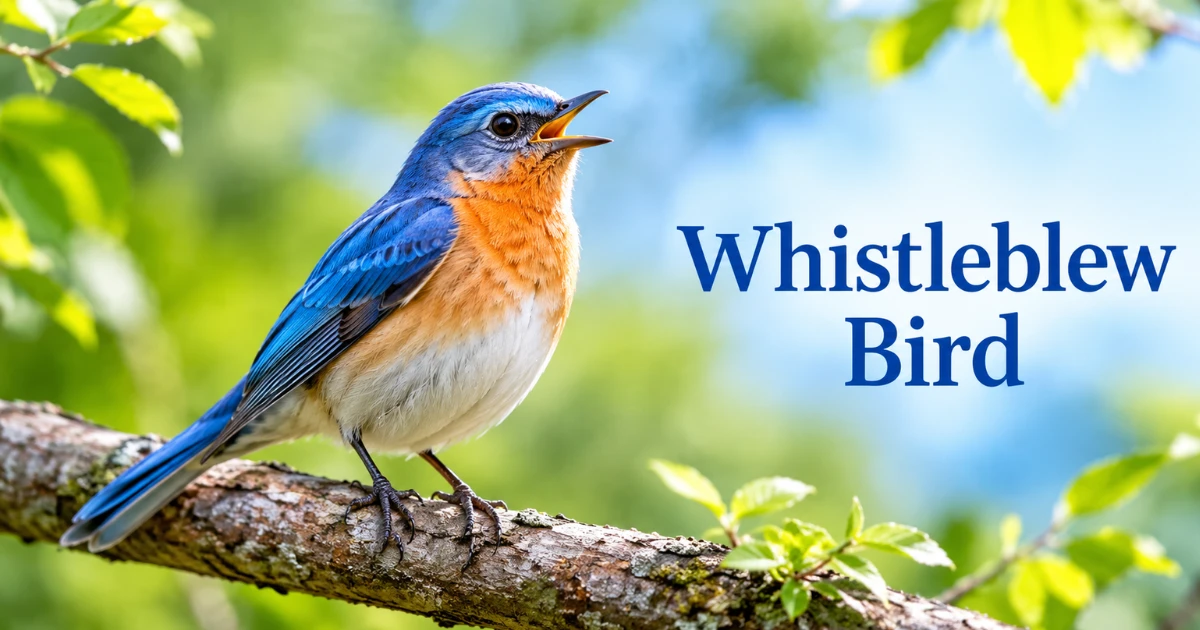
Whistleblew bird is a phrase that confuses a lot of people online. It looks like a bird name, but it isn’t one. This guide breaks down exactly where the term comes from and which real birds it likely points to.
Searching “whistleblew bird” usually means one of two things. Either you’re curious about the word itself, or you heard a whistling call outside and want to know what made it. This article covers both angles clearly.
What Does Whistleblew Mean?
The word whistleblew is not a made-up term. It has a real place in English grammar.
Whistleblew Is the Past Tense of Whistleblow
Whistleblew is simply the past-tense form of the verb whistleblow. Think of it the same way you’d think of “grew” from “grow” or “threw” from “throw.” The verb whistleblow means to report wrongdoing, often inside a company, government office, or organization. So “she whistleblew on the scheme” means she reported it.
Whistleblower and Whistleblowing Explained
Related words follow the same root. A whistleblower is the person who exposes misconduct. Whistleblowing is the act itself. None of these words, on their own, describe a bird. That connection only shows up once “bird” gets added to the phrase.
Why Does Whistleblew Bird Show Up in Bird Searches?
This is where things get interesting. The phrase whistleblew bird doesn’t come from ornithology books. It comes from how people describe sound.
Sound-Based Nicknames Are Common in Birdwatching
Birders often create informal labels based on what a call sounds like. A bird that makes a sharp, musical note gets nicknamed a “whistler” long before anyone learns its real name. Over time, casual phrases like this spread through forums, comment sections, and social posts.
Search Behavior Creates Hybrid Phrases
Search engines also play a role. When someone types a rough description of a sound plus the word “bird,” search tools try to match it to the closest real terms. This blends an actual English word (whistleblew) with a nature-related search, creating a phrase that looks official but isn’t.
Is Whistleblew Bird a Real Species?
No. No bird holds “Whistleblew Bird” as an official common name or scientific name. This is the direct, short answer, and it’s backed by basic taxonomy. Every recognized bird species has a standardized common name and a Latin binomial name. Whistleblew Bird matches neither format.
What people usually mean, instead, is a bird known for a loud or musical whistle. The Whimbrel is the closest real match, and it’s worth knowing well.
If one bird deserves the “whistleblew” label, it’s the Whimbrel.
Scientific Name and Family
The Whimbrel’s scientific name is Numenius phaeopus. It belongs to the sandpiper family, a group of long-legged shorebirds built for probing mud and sand. Its long, curved bill is a giveaway feature even before you hear it call.
What the Whimbrel’s Call Sounds Like
The Whimbrel produces a fast, rolling series of whistled notes, often described as a rapid “bibibibibi” trill. This call carries far across open coastlines, which is exactly why it stands out to birders and casual listeners alike.
Migration and Coastal Presence in the USA
Whimbrels are long-distance migrants. They breed in the Arctic tundra and travel to coastal wetlands across the Americas, including many U.S. shorelines, during migration season. If you’ve heard a whistling shorebird along a beach or tidal flat in spring or fall, there’s a strong chance it was a Whimbrel passing through.
The Seven-Whistler Folk Name
Older English folklore gave the Whimbrel a nickname: the “seven-whistler.” This ties directly into old superstitions, which we’ll cover shortly.
Other Birds Known for Whistling Calls
The Whimbrel isn’t the only whistler. Several familiar birds fit the description too.
Northern Cardinal
The Northern Cardinal is one of the most recognized backyard birds in the eastern and central United States. Its call is a clear, repeated whistle, often rendered as “cheer-cheer-cheer” or “birdy-birdy-birdy.”
Whistling-Ducks
Whistling-ducks get their name directly from their voice. Their call is a high, thin whistle, quite different from the typical quack of other duck species.
Hermit Thrush
The Hermit Thrush produces a flute-like, almost musical whistle from deep in forest habitats. Many listeners describe it as one of the most beautiful sounds in North American woodlands.
Why Do Birds Whistle in the First Place?
Whistling isn’t random. It serves clear biological purposes.
The Syrinx Powers Bird Sound
Birds don’t have vocal cords like humans. Instead, they use an organ called the syrinx, located where the windpipe splits toward the lungs. This structure lets many birds produce two sounds at once, which is part of why some calls sound so layered and musical.
Common Reasons Birds Whistle
Birds whistle to:
Defend territory from rivals
Attract a mate during breeding season
Warn others of nearby danger
Stay in contact with a mate or flock
Coordinate group movement
Communicate with chicks
Each whistle carries meaning. It’s rarely just noise.
How to Identify a Bird by Its Whistle
How do you identify a whistling bird you can’t see? Start with the sound, then confirm with sight.
Listen Closely First
Count the notes. Notice if the pitch rises, falls, or stays flat. A short, sharp double note behaves very differently from a long, rolling trill like the Whimbrel’s.
Record and Compare
Use your phone to record the call. Bird-identification apps can match recordings against known species almost instantly, which speeds up identification dramatically.
Confirm With Visual Clues
Once you spot the bird, check its size, bill shape, and habitat. A curved bill near water points toward a shorebird like the Whimbrel. A stocky red bird in a backyard points toward a cardinal.
Whistleblew Bird and the Seven Whistlers Legend
There’s a folklore layer worth mentioning here too.
Origins of the Seven Whistlers Myth
English folk tradition includes tales of the Seven Whistlers, mysterious whistling sounds heard at night, once believed to warn of misfortune or death. This superstition dates back centuries in rural England.
How the Whimbrel Fits the Legend
Because the Whimbrel’s whistled trill is loud, fast, and often heard after dark during migration, it became tied to the Seven Whistlers legend over time. The bird’s real call likely explains a good portion of this old folklore.
FAQ’s
Is Whistleblew Bird a real species?
No. No bird carries “Whistleblew Bird” as an official common name or scientific name. It is not recognized in any taxonomic classification.
Is “whistleblew” a real English word?
Yes. It’s the simple past tense of the verb whistleblow, which means to report wrongdoing or expose misconduct.
What part of speech is “whistleblew”?
It functions as a verb, specifically the past-tense form of whistleblow, following the same pattern as irregular verbs like “grow” becoming “grew.”
Can “whistleblew bird” be used informally to describe a bird?
Yes. People sometimes use the phrase casually to describe birds known for sharp, musical, or whistle-like calls, even though it isn’t an official name.
Which real bird best matches the “whistleblew” description?
The Whimbrel (Numenius phaeopus) is the strongest real-world match. It’s known for a fast, rolling whistle and its old folk name, the “seven-whistler.”
Do all birds produce whistling sounds?
No. Birds make many different sounds, including chirps, trills, clicks, and rattles. Whistling is just one style among several, produced through the syrinx.
Final Thoughts
Whistleblew bird isn’t a species. It’s a blend of a real English word and an informal, sound-based nickname for birds with musical calls. The Whimbrel offers the clearest real connection, backed by its rolling whistle and its place in old folklore. Understanding both sides, the language and the birdlife, clears up the confusion for good.
I am the admin and author of SizesFrame. I research, verify, and explain dimensions in simple words to help users understand sizes clearly and accurately.